
Can staff keep up with the digitalisation of retail?
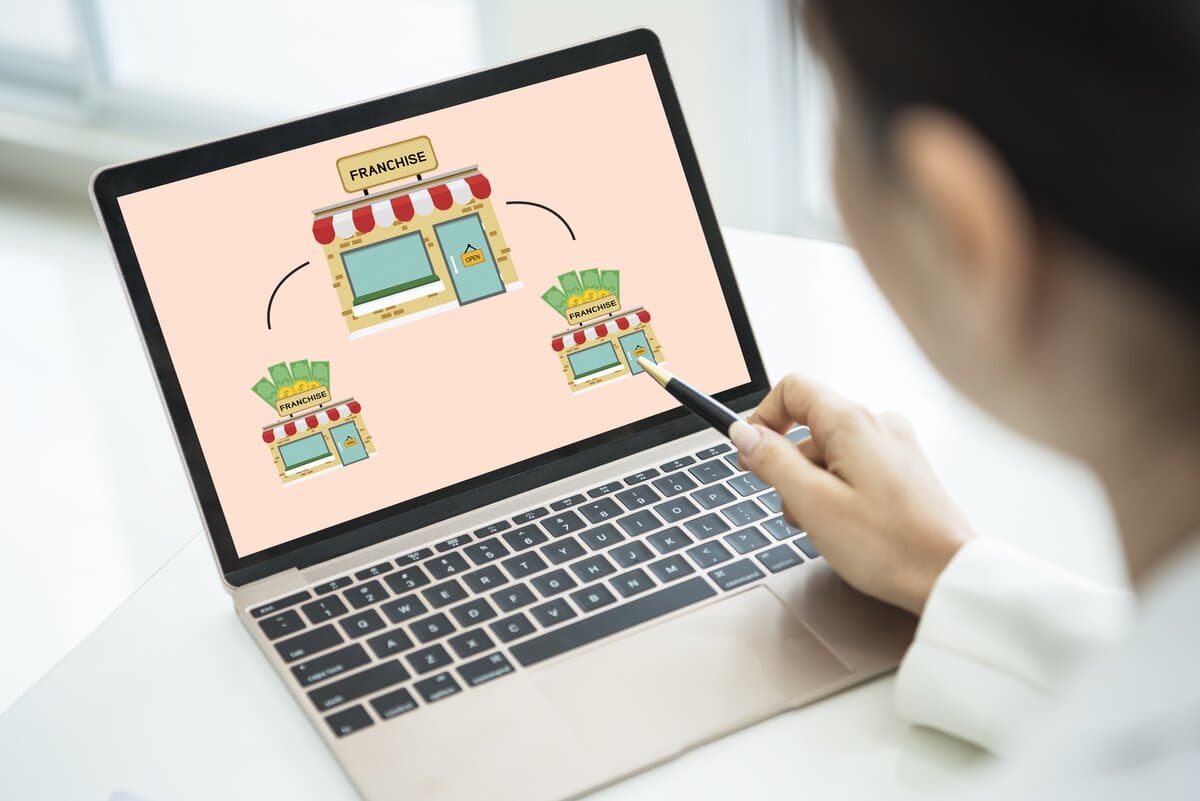
During the pandemic, incredible leaps in development were made on all fronts, not least in retail. McKinsey has written that in just a couple of years, we achieved digitalisation equivalent to 10 years. And that this rapid pace of change is here to stay.
The question is, can we keep up?
Before the pandemic, omnichannel was something of a buzzword that retail was striving towards. After the pandemic, it feels like it has become a reality for many. Proof of this is that the Swedish Trade Federation announced they were merging Swedish Trade and Swedish Digital Trade, as the lines between them had become increasingly blurred.
What we are now talking about instead are words like "phygital", where we mix the physical and digital. And just like the rest of the world, retail has gone hybrid.
What does all of this mean for staff?
It means a greater need for knowledge. Not just knowledge to best help the customers who walk into the store choose the right products, but also knowledge about the entire range that can be offered to the customer across all your channels.
The requirement to master systems is also growing. It is no longer enough to handle a simple cash register. Now staff need to understand the entire e-commerce ecosystem. Customers who come into the store for help may expect assistance with an order they placed online a couple of days ago.
There is an explosion of systems that staff in every store need to be able to handle. Ideally, the systems should talk to each other and integrate fully, but reality is usually not as optimised as it could be – integrating systems also comes at a cost.
It is also not enough for just the permanent staff to be on top of everything new. Everyone who works in the store must have the same ability to help customers. Most customers visit stores outside of working hours – evenings and weekends – when there are the most part-time staff.
We are increasingly noticing that store staff do not have a handle on all their systems. If you go into a store today to exchange a size on an order from the online shop, it is not uncommon to end up waiting while the staff try to figure out what needs to be done and how.
How to keep pace when digitalising the retail chain
The solution is certainly not to slow down. Most retail chains we talk to understand this and are instead focusing on working smarter. Now that stores need to handle more systems to help customers in both the physical and digital store, the solution consists of two parts.
- The right systems, integrations, and automation
- The right knowledge
The right systems, integrations, and automation
A tremendous help for store staff workload is of course having as much as possible automated. Ideally, customers should get help with their order at the moment they notice something is not right. This rarely happens while the person is in the store.
For example, most stores that ship orders quickly know when an order has reached the recipient. This can help the store catch those who need assistance and proactively direct them to customer service. That way, the store can become a point for picking up or dropping off an order that has already been handled.
But even when a customer comes into the store with their issue, staff benefit from systems that talk to each other and integrate as much as possible. Take something as simple as a centralised and reliable stock count that does not require staff to check once in their own warehouse and once in the digital one. Something that is still not a reality in all stores.
The right knowledge
But integrations and automation can only simplify things for store staff to a point. Ultimately, they still need to understand your processes and handle what remains in your systems. That is where ongoing training comes in.
You will always need to swap out some system in the mix, and your processes will always be refined and changed. In this faster pace of change, it is no longer enough to run a walkthrough for half the staff once a year at a conference and then hope it sticks and gets passed on to new employees and those who could not attend.
Better to instead take a systematic approach and continuously provide all employees with digital training on the systems and processes relevant to them. Something they can access on demand and review on their own as needed.
We are happy to help if you want to take control of ensuring that all staff in all stores have the right information and knowledge to handle your systems and give your customers the best possible experience.
More articles

We visited 20 stores to see how many greeted us
Times are tough and retail dominates the bankruptcy statistics. But is the economy solely to blame?
Läs mer

What you should consider when investing in a new LMS for your retail chain!
An LMS is an important investment for all organizations but especially important for retail chains.
Läs mer
Is HR the rescue of retail chains in the recession?
HR holds the keys to unlocking enormous competitive advantages for retail chains.
Läs mer